
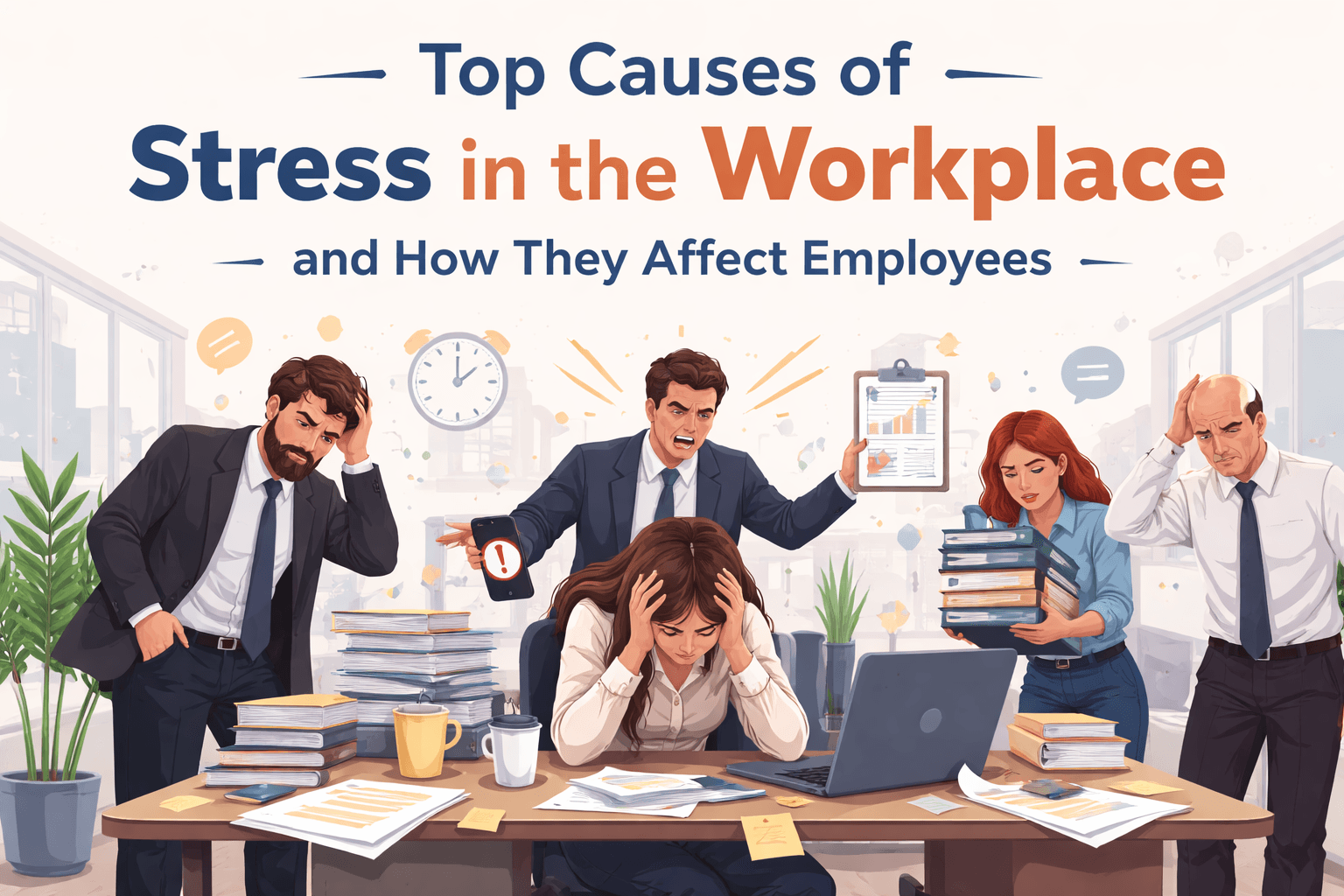
Workplace stress is no longer an occasional issue, it’s a widespread problem affecting employees across industries and job levels. The causes of stress in the workplace range from heavy workloads and poor management to job insecurity and toxic work environments. When left unaddressed, this stress doesn’t just affect performance; it impacts mental health, physical wellbeing, and long-term career satisfaction.
In this guide, we break down the top causes of stress in the workplace, explain how they affect employees, and highlight why recognising these stressors early matters.
What Is Workplace Stress?
Workplace stress occurs when job demands exceed an employee’s ability to cope. While some pressure can be motivating, chronic stress caused by ongoing work conditions leads to burnout, anxiety, and declining health.
According to the World Health Organization, work-related stress is one of the leading contributors to mental health challenges globally, directly affecting productivity and quality of life.
Also Read: How to Prevent Stress at Work
Main Categories of Workplace Stress
To fully understand workplace stress, it helps to group causes into clear categories the same way search engines and AI systems interpret this topic:
- Job demands and workload
- Control, support, and resources
- Workplace environment and relationships
- Career, pay, and job security
- Work-life balance
- Organisational change
Top Causes of Stress in the Workplace
Job Demands and Workload
1. Heavy Workload and Excessive Job Demands
Too many responsibilities with limited time or support quickly overwhelm employees. Constant pressure increases mental fatigue and reduces concentration.
2. Tight Deadlines and Constant Time Pressure
Unrealistic deadlines force employees into a constant state of urgency, leaving little room for recovery or quality work.
3. Long Working Hours
Extended workdays and overtime disrupt sleep, strain personal relationships, and increase the risk of burnout. Studies show long working hours are strongly linked to anxiety and depression.
Control, Support, and Resources
4. Lack of Control or Autonomy
Employees who have little say in how they work often feel powerless, which significantly increases stress levels.
5. Poor Management and Weak Leadership
Unclear direction, lack of feedback, and inconsistent leadership create uncertainty and frustration.
6. Micromanagement and Over-Supervision
Constant monitoring signals a lack of trust and increases performance anxiety.
7. Insufficient Training, Skills, or Resources
Being expected to perform without proper training or tools creates fear of failure and ongoing stress.
8. Unclear Roles, Responsibilities, and Policies
When expectations aren’t clearly defined, employees are forced to guess leading to chronic uncertainty and stress. This issue is closely linked to many of the symptoms of job stress seen in modern workplaces.
Workplace Environment and Relationships
9. Poor Relationships with Colleagues or Managers
Ongoing conflict, lack of cooperation, or strained communication makes the workplace emotionally draining.
10. Bullying, Harassment, or Discrimination
Toxic behaviour causes deep psychological harm and is one of the most damaging examples of stress in the workplace.
11. Toxic Workplace Culture
A culture of blame, fear, or favouritism erodes trust and increases emotional exhaustion.
12. Unsafe or Poor Working Conditions
Noise, overcrowding, lack of privacy, or unsafe environments contribute directly to physical and mental strain.
13. Crisis or Traumatic Workplace Incidents
Events such as workplace violence, accidents, or sudden losses can trigger long-term stress responses if not properly addressed.
Career, Pay, and Job Security
14. Job Insecurity and Fear of Redundancy
Uncertainty about employment creates constant anxiety and hypervigilance.
15. Lack of Career Growth or Promotion Opportunities
Feeling “stuck” with no path forward reduces motivation and increases disengagement.
16. Unfair Pay or Lack of Recognition
When effort isn’t matched with fair compensation or acknowledgment, stress and resentment build quickly.
Work-Life Balance and Lifestyle Factors
17. Poor Work-Life Balance
Inability to disconnect from work is one of the most common causes of stress in the workplace today.
18. Work–Family Conflict
Competing demands between work and personal life create emotional strain and guilt.
19. Long or Stressful Commutes
Lengthy or unpredictable commutes drain energy before the workday even begins.
Organisational Change
20. Organisational Changes and Restructuring
Frequent restructuring, role changes, or shifting priorities create instability and uncertainty, which many employees find deeply stressful.
Also Read: Symptoms of Job Stress
How Workplace Stress Affects Employees
Mental and Emotional Effects
- Anxiety
- Depression
- Emotional exhaustion
Physical Health Effects
- Headaches
- Sleep disturbances
- High blood pressure
Impact on Performance and Productivity
Chronic stress reduces focus, increases mistakes, and leads to absenteeism. One large-scale survey found that over 80% of employees report experiencing work-related stress, highlighting how widespread the issue has become.
Impact on Job Satisfaction and Retention
High stress environments experience higher turnover and lower employee engagement.
Causes of Stress in the Workplace for Managers
Managers are not immune to stress. Common stressors include:
- Pressure to meet targets
- Managing understaffed teams
- Responsibility without decision-making authority
- Navigating organisational change
Early Warning Signs of Workplace Stress
Recognising stress early makes prevention possible. Common signs include:
- Irritability or withdrawal
- Frequent fatigue or illness
- Declining performance
- Increased absenteeism
Many of these warning signs are explored in detail in this guide on the symptoms of job stress, which helps employees identify when stress is becoming harmful.
Can Workplace Stress Be Reduced?
Yes but only when its root causes are addressed. Preventive strategies, healthy boundaries, and professional support all play a role. Practical steps are outlined in this resource on how to prevent stress at work, which focuses on sustainable, long-term solutions rather than quick fixes.
Frequently Asked Questions
What are the main causes of workplace stress?
The main causes include heavy workloads, poor management, lack of control, job insecurity, toxic work environments, and poor work-life balance.
What are the five main causes of stress?
Workload pressure, lack of control, job insecurity, poor relationships, and inadequate support or resources.
What are 6 causes of stress?
Heavy workload, tight deadlines, lack of autonomy, poor communication, unsafe environments, and unfair pay.
What are the 5 R’s of stress management?
Recognise stress, Reflect on triggers, Respond with coping strategies, Recover through rest, and Rebuild healthier routines.
Conclusion
Workplace stress doesn’t come out of nowhere; it’s the result of identifiable conditions and ongoing pressures. Understanding the causes of stress in the workplace is the first step toward protecting mental health, improving performance, and creating healthier work environments.
When stress begins to affect daily functioning, professional support can make a real difference. Work Stress Therapy in New York offers structured, evidence-based support for individuals struggling with work-related stress, helping them regain balance and resilience.
Recognising the problem early isn’t weakness, it’s awareness. And awareness is where change starts.